


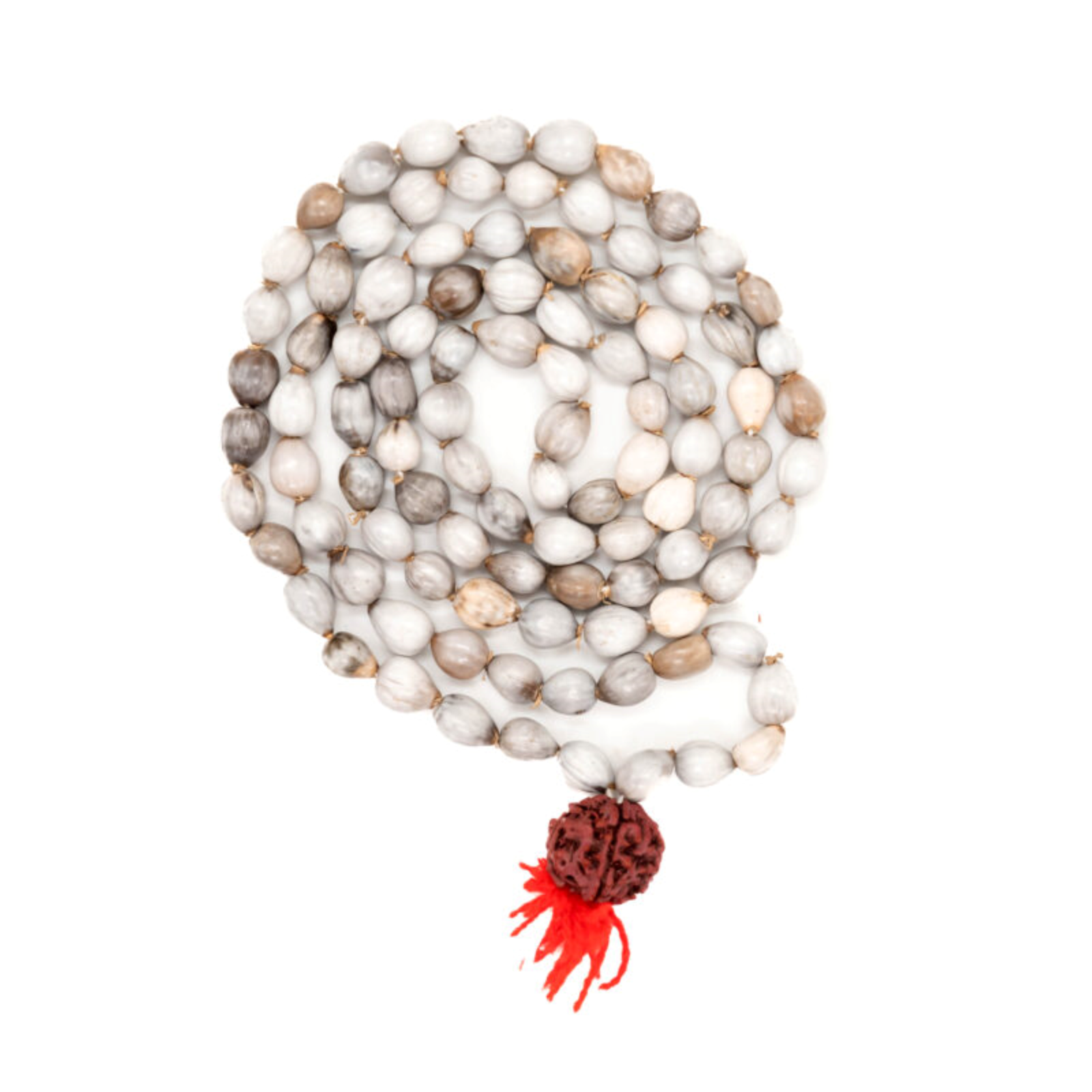

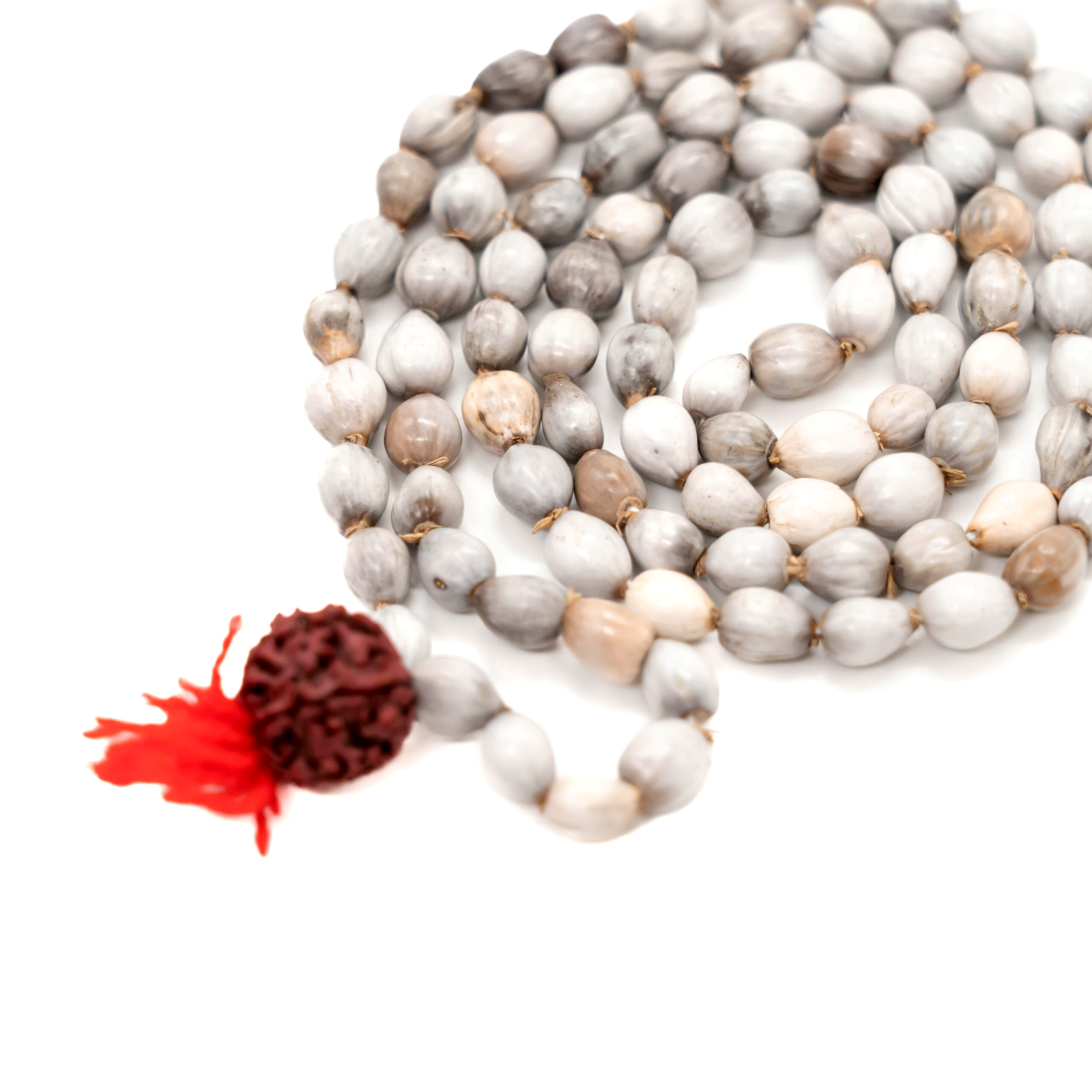






Sacred Vaijayanti Mala (108+1 Beads) – The Garland of Victory

Original price was: ₹449.00.₹399.00Current price is: ₹399.00.
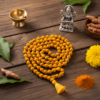
Vaijayanti Mala is more than a spiritual accessory; it is a symbol of triumph, devotion, and divine protection. Handcrafted from the natural seeds of the Vaijayanti plant (often identified as Coix lacryma-jobi or Job’s Tears), these beads are found in the sacred forests of Braj (Vrindavan and Mathura), where Lord Krishna spent his childhood.
Vaijayanti Mala is more than a spiritual accessory; it is a symbol of triumph, devotion, and divine protection. Handcrafted from the natural seeds of the Vaijayanti plant (often identified as Coix lacryma-jobi or Job’s Tears), these beads are found in the sacred forests of Braj (Vrindavan and Mathura), where Lord Krishna spent his childhood.
1. Physical Characteristics
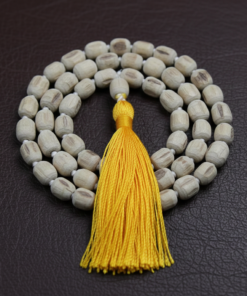
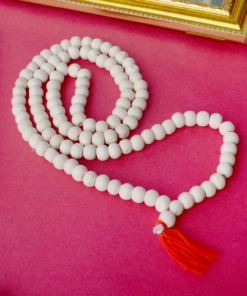
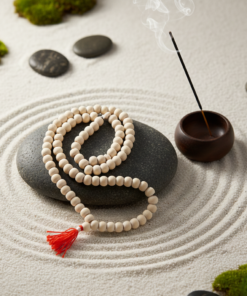
The Beads: The mala consists of 108 natural seeds plus one “Guru bead” (the 109th bead), which marks the beginning and end of a chanting cycle.
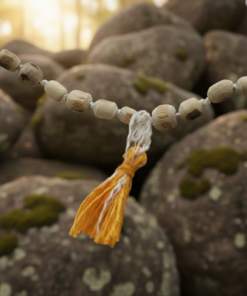
Texture & Color: The seeds are naturally smooth, teardrop or oval-shaped, and usually come in shades of off-white, grey, or black. They have a unique, polished feel that becomes smoother with regular use.
Durability: Unlike wooden beads, these seeds are remarkably hard and resistant to wear, making them ideal for daily Japa (mantra chanting).
2. Spiritual Significance
Lord Krishna’s Favorite: Mythology states that Lord Krishna wore a Vaijayanti Mala to symbolize his victory over ego and his divine love for Radha. It is the primary rosary used by Vaishnava devotees.
The Number 108: In Vedic tradition, 108 is a sacred number representing the wholeness of existence, aligning the wearer’s energy with the universe.
Victory & Success: The name Vaijayanti literally means “that which brings victory.” It is believed to help the wearer overcome obstacles in both spiritual and professional life.
3. Key Benefits
Mental Clarity: Chanting with these beads helps calm a wavering mind, reducing stress and anxiety.
Protection: It is often used as a spiritual talisman to shield the wearer from negative energies and “evil eye.”
Devotional Growth: It is the most recommended mala for chanting the Maha-Mantra or the Vishnu mantra: “Om Namo Bhagavate Vasudevaya.”
Astrological Support: Many believe it helps mitigate the malefic effects of Saturn (Shani) and brings balance to the wearer’s aura.
Care and Usage Tips
Purification: Before first use, it is common to wash the mala with Ganga water or raw milk and offer it at the feet of a deity.
Storage: When not in use, store it in a clean cotton or silk pouch (Gomukhi) to maintain its sanctity.
Respect: It is traditionally advised to remove the mala before sleeping or bathing to keep it pure and prevent damage from soap or moisture.
Be the first to review “Sacred Vaijayanti Mala (108+1 Beads) – The Garland of Victory”
Related products

Reviews
There are no reviews yet.